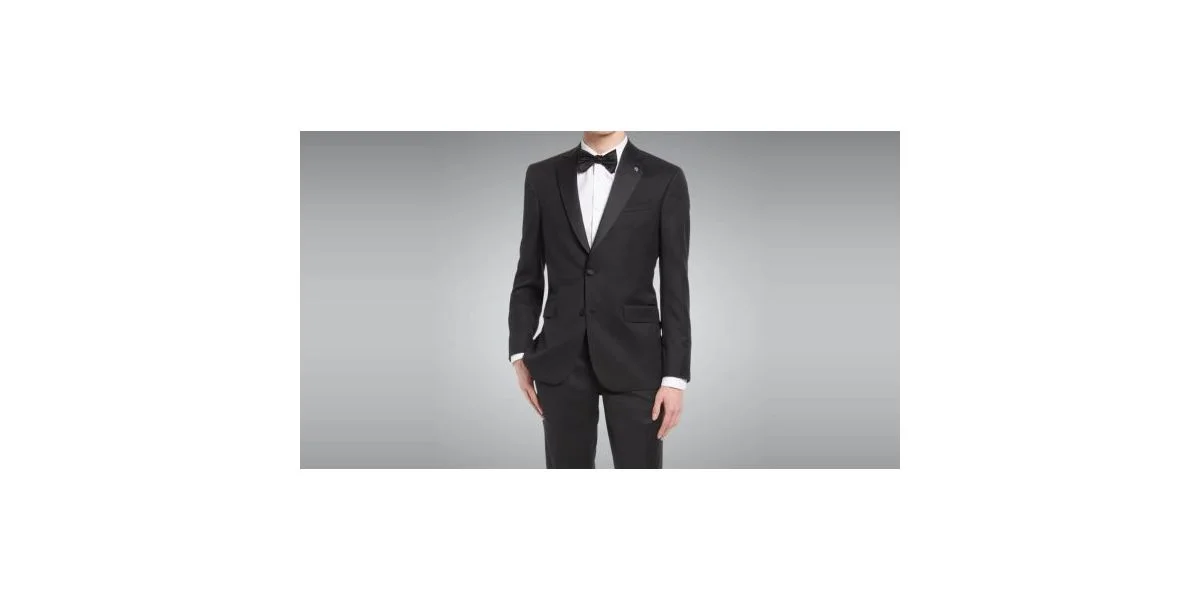
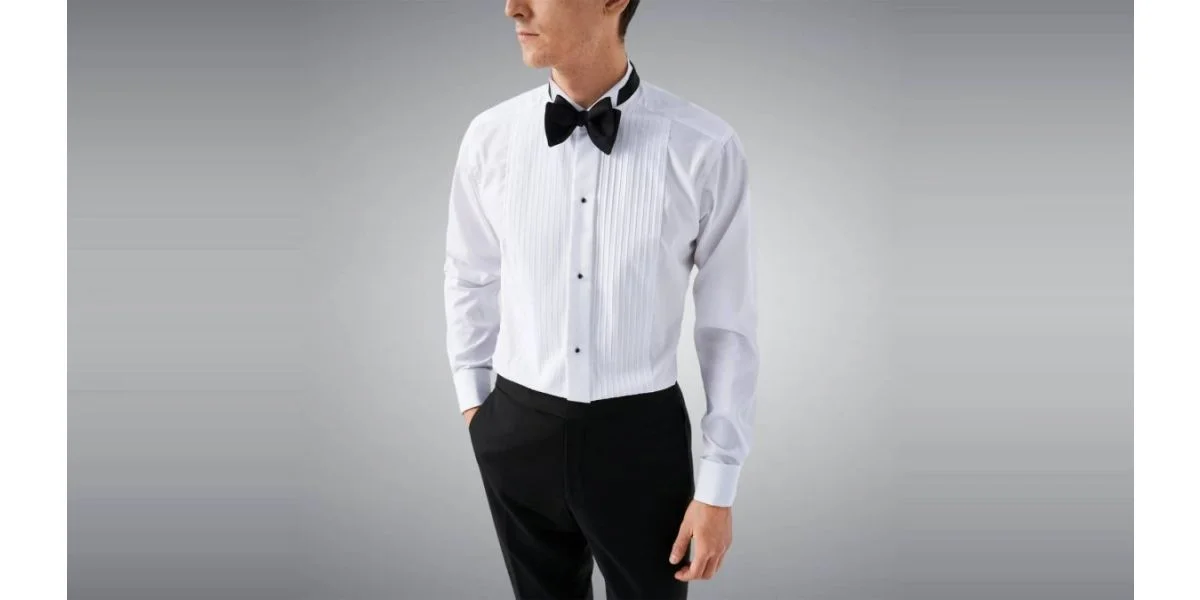
A barrel cuff is a single layer of fabric that closes with one or two buttons; a French cuff is twice as long, folded back on itself and fastened with cufflinks. Wear French cuffs with a tuxedo and at formal evening events, and barrel cuffs for everyday suits, business and anything more relaxed.
The cuff is a small part of a shirt, but it is the one people see every time you reach for a glass or shake a hand. Below is what each cuff type is for, how much should show under your jacket, and a quick map of the other parts of a dress shirt so you know what you are choosing when you order one.
The cuff types
- One-button barrel cuff: the standard dress-shirt cuff. Neat and slim, fits under a watch.
- Two-button barrel cuff: a deeper cuff with two buttons side by side or stacked. Slightly dressier, a common detail on business shirts.
- French (double) cuff: a long cuff folded back so both edges meet and line up, held together with cufflinks or silk knots through four buttonholes. The traditional formal cuff.
- Corner shape: any of these can be cut round, angled (mitered) or square. Round is the softest look, square the most formal, angled sits between.
Which cuff for which occasion
| Occasion | One-button barrel | Two-button barrel | French cuff |
|---|---|---|---|
| Black tie, tuxedo | Avoid | Avoid | Best: the traditional choice |
| Formal evening wedding, groom | Acceptable | Acceptable | Best |
| Wedding guest, daytime | Best | Good | Good |
| Job interview | Best | Good | Acceptable; can look showy in some fields |
| Office, everyday suit | Best | Good | Acceptable in formal workplaces |
| Board meeting, client presentation | Good | Good | Good |
| Tieless suit, smart casual | Best | Good | Avoid: too formal without a tie |
| Under a sweater or with no jacket | Best | Good | Avoid: bulky and easily caught |
| Wearing a large watch | Good if the cuff is cut a little wider | Acceptable | Awkward: the doubled cuff doesn't slide over a watch |
The rule behind the table: French cuffs belong with a jacket and a tie or bow tie. Remove either and they start to look out of place.
How much cuff should show
With your arms relaxed at your sides, about a quarter to half an inch of shirt cuff should show below the jacket sleeve. That small band of white is a sign the shirt and jacket fit each other.
- No cuff showing: the jacket sleeves are too long, or the shirt sleeves are too short.
- More than an inch: the jacket sleeves are too short, or the shirt is too long and will bunch at the wrist.
- French cuffs: aim for the upper end of the range, around half an inch, so the cufflinks are visible when you move.
- Uneven arms: most people have one arm slightly longer. If one cuff disappears, the sleeves should be measured separately.
Getting this right starts with an accurate sleeve measurement. Our size guide shows where to place the tape, from the shoulder point to the wrist bone.
The parts of a dress shirt
Ordering a custom shirt means choosing each of these. Here is what each part is and what changing it does.
| Part | What it is | What to choose |
|---|---|---|
| Collar | The fold-over band around the neck, with points or rounded tips | Spread or cutaway for ties, button-down or one-piece for tieless, wing for a tuxedo |
| Collar stand | The band underneath that lifts the collar | Taller stands hold their shape better without a tie |
| Placket | The strip down the front where the buttons sit | A single or box placket for most shirts, hidden buttons for a cleaner, dressier front |
| Yoke | The panel across the upper back, joining shoulders to body | Set by the pattern; it shapes how the shoulders fit |
| Back pleats | Folds below the yoke that add room to move | Plain for a slim fit, box or side pleats for more movement |
| Sleeve placket (gauntlet) | The short opening above the cuff | A small button here stops it gaping |
| Cuffs | The end of the sleeve | See the table above |
| Chest pocket, if any | None for a dressier shirt | |
| Hem | The bottom edge | Curved or straight; a dress shirt is worn tucked |
Choosing cuffs when you order
Our Design Your Own Shirt lets you pick the cuff: one-button or two-button barrel cuffs, or French cuffs, each in a round, angled or square cut. You also choose the collar, placket, back, hem and pocket, and for a tuxedo shirt, the front style. Ready-designed dress and tuxedo shirts are available in standard sizes or made to your measurements, made in 2–3 weeks; our Wing Collar Tuxedo Shirt and Pleated Tuxedo Shirt both have French cuffs. For black tie, our tuxedo shirt guide explains how the cuff fits with the collar and front. Our dress and tuxedo shirts come with cufflinks as a free add-on, so choosing French cuffs doesn't mean a separate purchase.
Questions
Can you wear French cuffs without cufflinks?
Not properly. A French cuff has buttonholes on both layers and no buttons, so it needs cufflinks or silk knots to close. Silk knots are an inexpensive, less formal option.
Are French cuffs required with a tuxedo?
They are traditional and the safest choice. A barrel cuff under a tuxedo is acceptable; French cuffs complete the formal look.
Is a two-button cuff more formal than a one-button cuff?
Slightly. Both are barrel cuffs suitable for business and everyday wear. Two buttons make a deeper cuff that some people prefer with a wide watch strap; one button is the cleaner, more common choice.