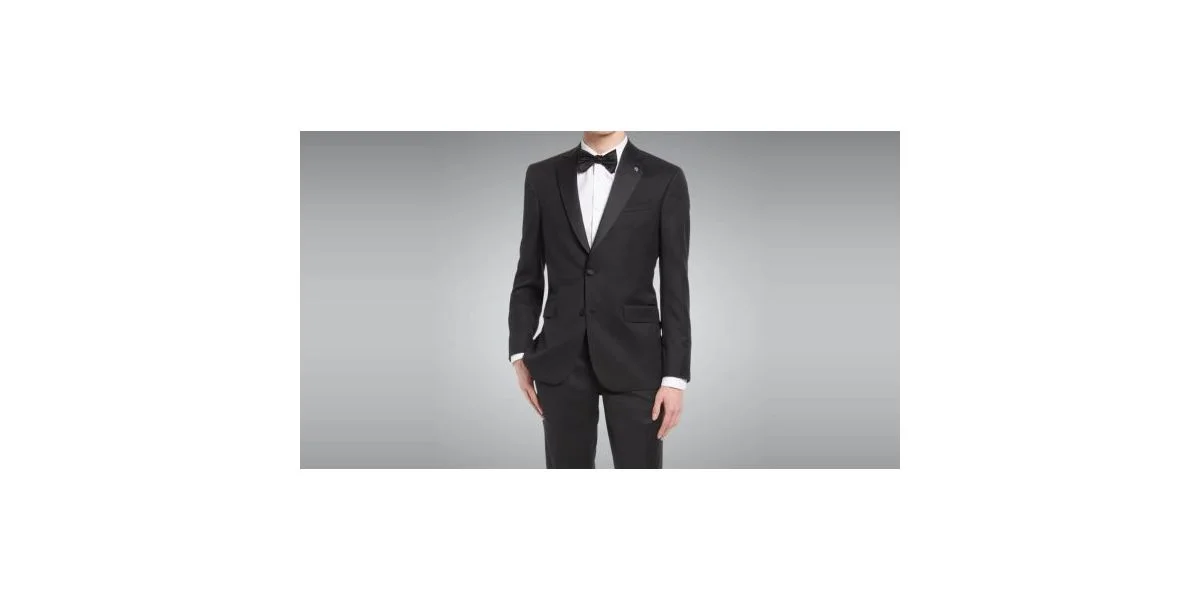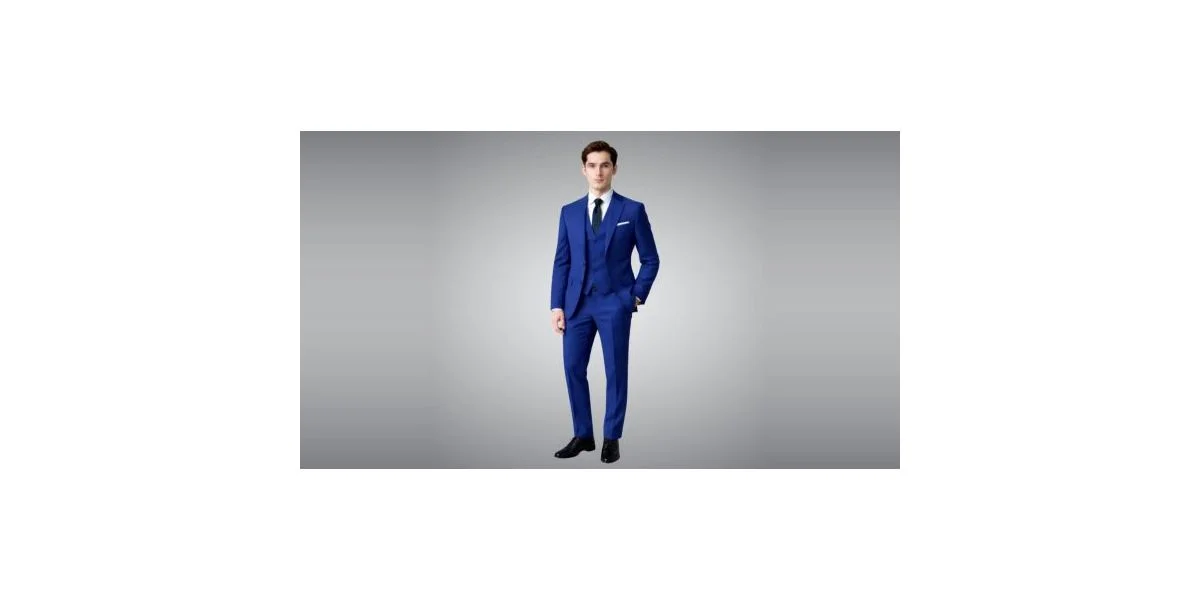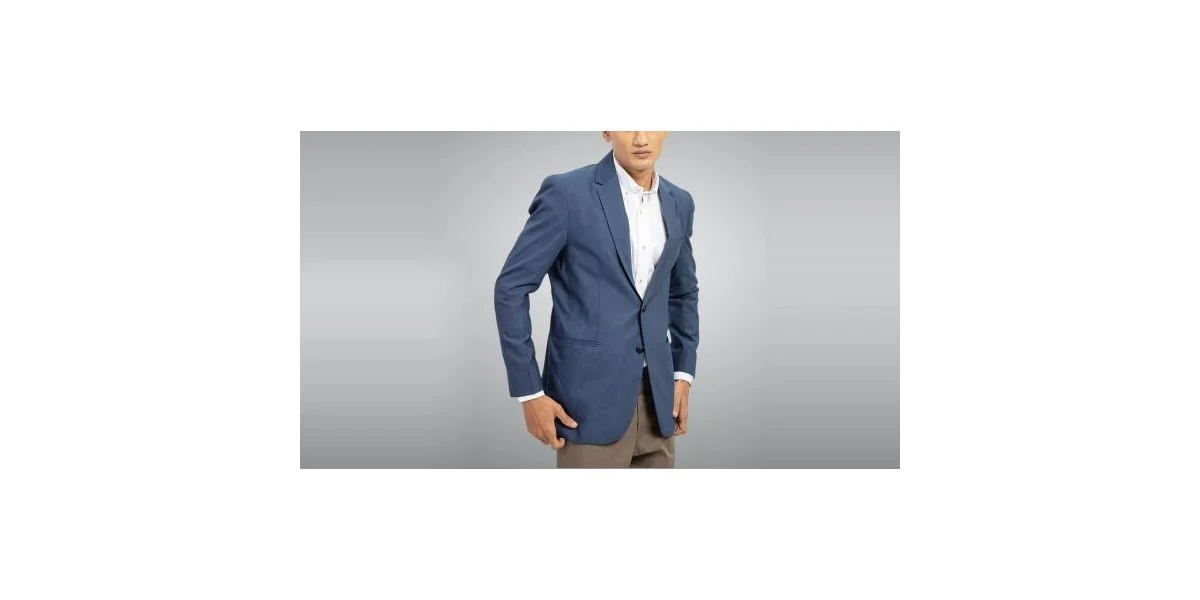
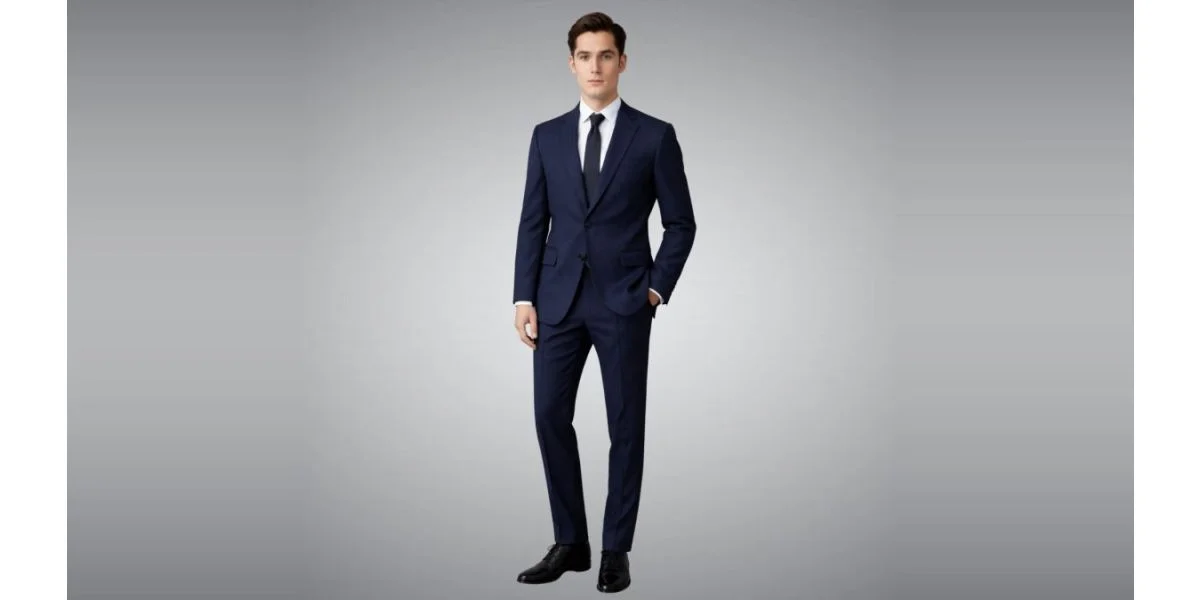
A suit fits when the shoulder seam ends at your shoulder bone, the jacket buttons without pulling, the collar sits against your shirt collar and the jacket covers your seat. The trousers should sit at your waist without a belt doing the work and fall cleanly to your shoes. Everything else is detail, and most of that detail can be adjusted by a good tailor.
The check below works for any suit, whether it came off a rack, from a standard size or from your own measurements. A tuxedo is judged on exactly the same points.
Before you look in the mirror
Dress the way you will on the day. Wear the shirt you plan to wear (a thick casual shirt changes the chest and sleeve), the shoes (they change where the trousers end) and empty your pockets. Button the jacket's top button on a two-button suit, or the middle one on a three-button. Stand naturally with your arms at your sides. If you can, use two mirrors or ask someone to photograph you from the front, side and back, because half of these points are behind you.
The 10-point mirror check
| # | Check | Good fit looks like | Warning signs | Can a tailor fix it? |
|---|---|---|---|---|
| 1 | Shoulders | Seam ends at the edge of your shoulder bone; sleeve falls straight from it | Dent or ripple below the shoulder pad, pad overhanging, seam riding up onto the shoulder | Rarely. Shoulders are the most difficult and least reliable alteration |
| 2 | Collar | Jacket collar rests on the shirt collar all the way round, showing a little shirt collar above it | Gap between jacket and shirt at the back of the neck, or a roll of cloth below the collar | Often, by a skilled tailor; it is fiddly work |
| 3 | Chest and lapels | Lapels lie flat against the chest when buttoned | Lapels bowing outward, cloth pulling into an X from the button | A little room can sometimes be let out; a jacket that is clearly too small stays too small |
| 4 | Waist and buttoning | Front closes smoothly with a gentle shape at the waist | Strain lines at the button, or loose cloth hanging straight down | Yes. Taking in is routine; letting out depends on spare cloth in the seams |
| 5 | Back | Smooth from collar to hem, no folds | Horizontal folds (too tight across the back or hips) or vertical slack (too loose) | Usually, through the center back and side seams |
| 6 | Sleeve length | A sliver of shirt cuff shows, roughly a quarter to half an inch, with arms relaxed | Sleeve covering the cuff and touching the hand, or a lot of shirt showing | Yes. One of the easiest alterations, unless the sleeve has working buttons |
| 7 | Jacket length | Covers your seat; hem sits around your thumb knuckle | Seat exposed, or the jacket reaching mid-thigh | Shortening a little is possible; lengthening is not |
| 8 | Vents | Hang closed and straight when you stand still | Vents pulled open over the seat | Sometimes, by letting out the seat; often a sign the jacket is a size small |
| 9 | Trouser waist and seat | Trousers stay up without a belt; seat smooth; pockets lie flat | Pockets flaring open, fabric cupping under the seat, waistband folding | Yes. Waist and seat are standard work |
| 10 | Trouser length and leg | Hem meets the shoe with the break you chose; leg falls straight from the thigh | Pooling over the shoe, sock showing when you stand, tight thighs | Yes for length and tapering; thighs only if there is cloth to let out |
Read the last column as a priority list. Points 1, 3 and 7 are what you buy; points 4, 6, 9 and 10 are what you alter. If a jacket fails on the shoulders, chest or length, no amount of tailoring will make it right.
Three movement tests
A suit that looks fine standing still can still fail when you move. Do these after the mirror check.
- Reach forward as if shaking hands. Some tightness across the back is normal; if the back seam strains or the sleeve rides far up your forearm, the jacket is tight across the shoulders or the armholes are low.
- Sit down with the jacket unbuttoned. The trousers should not grip your thighs or dig in at the waist, and the seat should not feel like it might split.
- Raise your arms to shoulder height. The whole jacket will lift a little; if the collar lifts away from your neck, note it.
Where tuxedos differ
Use the same ten points, with two additions. Satin or grosgrain lapels show every ripple, so point 3 matters more on a tuxedo. Tuxedo trousers are traditionally worn without a belt, which makes point 9 a strict pass or fail: they must stay up on their own or with braces. Black-tie trousers usually look best with little or no break.
What to do with your results
If the suit is already yours, take the failed points to a tailor in order of the table. Our guide to what a tailor can and can't fix goes deeper on each alteration, and the jacket length tests settle point 7 if you are unsure.
If you are buying, the cheapest fix is avoiding the problem. Our made-to-measure suits are cut from your own shoulder, chest, waist, sleeve and trouser measurements, and a tailor checks that the numbers agree with each other before any cloth is cut. The measuring guide shows how to take each one.
And if a suit from us fails the check when it arrives, our fit promise applies to standard sizes and made to measure alike. Tell us within 30 days of delivery. Problems in the first column (shoulders, chest, length) are what the one free remake per garment is for, with shipping both ways paid by us. Smaller points such as sleeves, hems or a waist are often quicker to fix locally, and we pay up to $100 towards a local tailor for those adjustments.
Questions
Should a suit jacket be tight when buttoned?
Close, not tight. You should be able to slide a flat hand between the buttoned jacket and your shirt. If the button strains or the lapels lift off your chest, the jacket is too small.
Is it normal for a suit to feel different from a sport coat?
Yes. A suit jacket is usually cut a little closer and cleaner than a sport coat, which is often worn over thicker layers. Judge it against the ten points, not against your most comfortable jacket.
Which fit problem is the hardest to fix?
Shoulders. Altering them means taking the sleeves off and rebuilding the top of the jacket, and the result is often not quite right. Buy for the shoulders and alter everything else.